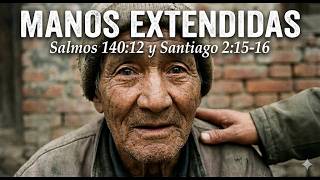
Embodying God's Justice: Why Our Faith Demands Tangible Compassion
I know that the LORD upholds justice for the poor and defends the cause of the needy. — Psalms 140:12
Suppose a brother or sister is without clothes and daily food. If one of you tells him, “Go in peace; stay warm and well fed,” but does not provide for his physical needs, what good is that? — James 2:15-16
Summary: Our understanding of God is inextricably linked to our ethical responsibilities, as His very nature is defined by unwavering justice for the poor and vulnerable. Consequently, true faith demands more than mere intellectual assent; it compels tangible acts of compassion, advocacy, and a commitment to systemic justice. We are called to embody God's character as His authorized agents, recognizing that neglecting the material needs of others is a severe theological failure and dishonors our Creator. This active allegiance, mirroring Christ's sacrificial love, is the genuine evidence of our loyalty and the ultimate validation of our theology.
The foundational truth of biblical theology reveals a profound and unbreakable connection between the very nature of God and the ethical responsibilities of humanity. This connection weaves a consistent narrative across the ancient scriptures and into the early Christian community, emphasizing social justice, loyal obedience, and the alleviation of suffering. At its heart, this message asserts that our understanding of God is incomplete, and our faith is profoundly lacking, if it does not compel us to active, tangible compassion for the vulnerable.
God's character is unequivocally defined by His commitment to justice for the poor and His defense of the needy. This is not a secondary attribute but an intrinsic aspect of His being, establishing a universal moral standard. The divine order is one where injustice, no matter how entrenched or systemic, is a temporary aberration that the Supreme Judge will ultimately rectify, ensuring the oppressed are vindicated and the vulnerable protected. The ancient Hebrew terms for "poor," "afflicted," and "needy" consistently describe individuals who are not merely economically deprived but also socially alienated, legally vulnerable, and often the victims of active oppression and exploitation. God's justice, known as mishpat , is not solely punitive but inherently restorative, actively seeking to rescue the marginalized, correct societal imbalances, and restore dignity within the community. He is unequivocally on the side of the oppressed.
This divine mandate for justice is then powerfully translated into an ethical imperative for believers. If God's very nature is to defend the vulnerable, then a claim to faith in Him is inherently invalidated if it does not produce tangible acts of justice and advocacy. Merely offering comforting words or spiritual blessings to someone desperately lacking basic necessities like food and clothing is not only insufficient but a severe theological failure. Such an empty gesture is deemed "dead" because it lacks the vital evidence of genuine, living loyalty to God.
The concept of faith in the biblical tradition goes far beyond mere intellectual assent; it signifies profound trust, unwavering dedication, and active allegiance to God. To have faith in the God who champions the poor requires His followers to adopt the very same posture. This is further illuminated by the principle of divine-human agency, known as shaliah. While God is the ultimate source of all provision and justice, He consistently commissions His covenant community—the Church—to act as His authorized agents in the world. When a believer encounters someone in need, they stand as a representative of the God of justice. To withhold material help while professing faith is to misrepresent God's character, making Him appear apathetic to suffering, and thus commits a form of theological disloyalty.
True faith, therefore, rejects any notion of a disembodied spirituality that separates physical needs from spiritual concerns. It recognizes the inherent dignity of every human being, created in God's image, and understands that neglecting bodily needs dishonors the Creator. God's salvation is holistic, aiming to restore both our spiritual relationship with Him and our material well-being. This understanding of faith is not about earning salvation through works, but recognizing that genuine salvation organically produces works of mercy. Just as Christ, though sovereign, emptied Himself to become poor so that humanity might become spiritually rich, believers are called to radical, sacrificial charity, even when it demands personal suffering. This tangible love is the empirical evidence of a regenerated heart.
Furthermore, a comprehensive faith extends beyond individual acts of kindness to embrace systemic justice. Poverty is frequently the result of exploitative systems and injustice, not merely unfortunate circumstances. Therefore, embodying God's justice means actively working to dismantle oppressive structures and secure the common good, recognizing God's "preferential option for the poor."
Ultimately, the fierce ethical demands placed upon believers are rooted in the life and teachings of Jesus Christ. He perfectly identified with the afflicted, faced systemic injustice, and His resurrection was the ultimate vindication of the righteous sufferer. His ministry seamlessly integrated spiritual healing with physical provision. Our treatment of the "least of these"—the hungry, the naked, the alienated—is how we treat Christ Himself. His incarnation, the Word becoming flesh, compels His followers to an "incarnational impulse," stepping into the material suffering of others with tangible aid. The cross itself, as the ultimate act of solidarity and restorative justice, demands that believers empty themselves for the marginalized, providing the clothing and food that genuine faith necessitates.
In conclusion, our orthodox belief in God is permanently and inextricably tied to our orthopraxy, our right living. To truly know the God who defends the poor is to become His hands and feet, actively feeding the hungry, clothing the naked, and working towards a more equitable world. Anything less is a hollow, non-saving faith that misrepresents the Creator. The truest validation of our theology is found not in our declarations, but in the warmth, equity, and fullness we bring to the most vulnerable members of the human family.
What do you think?
What do you think about "Embodying God's Justice: Why Our Faith Demands Tangible Compassion"?
Related Content
Outstretched Hands
Don't Just Drop a Coin
Psalms 140:12 • James 2:15-16
Oh no, another beggar wants something from me. Honestly, when we rush through our day and someone asks for spare change or time, our first instinct i...
Theological Exegesis and Ethical Synthesis: the Interplay of Psalm 140:12 and James 2:15-16
Psalms 140:12 • James 2:15-16
Introduction to the Biblical Ethic of Justice and Compassion The conceptual architecture of biblical theology is profoundly shaped by the dynamic ten...
Read in Context
Click to see verses in their full context.
Song (Other Languages)