The Heart's True Offering: Embracing God's Kingdom of Uncoerced Will
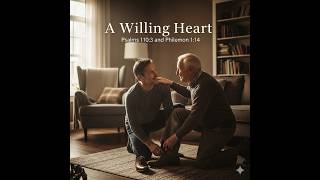
Your people shall be willing on Your day of battle. Arrayed in holy splendor, from the womb of the dawn, to You belongs the dew of Your youth. — Psalms 110:3
But I did not want to do anything without your consent, so that your goodness will not be out of compulsion, but by your own free will. — Philemon 1:14
Summary: God's reign is fundamentally built on our joyful, free will, not on compelled submission. This consistent divine principle, revealed from ancient prophecy to New Covenant ethics, highlights God's desire for willing hearts above all else. His "day of power" is not about overriding our will, but about transforming our hearts so we freely and joyfully choose Him. This paradigm profoundly shapes all our faith, service, and relationships, calling us to offer ourselves as living, voluntary sacrifices.
The biblical narrative unveils a profound truth about God's reign: it is a kingdom built not on forced submission, but on the joyful, free will of its subjects. From ancient prophecy to practical Christian living, a consistent message emerges—God desires our willing hearts above all else. This divine principle profoundly shapes how we understand our faith, our service, and our relationships within the family of God.
The ancient vision of the Messiah's kingdom, as revealed through prophecy, depicts a ruler whose power is unique. Unlike earthly monarchs who gather armies through conscription and fear, the Messiah's "day of power" gathers a populace that rallies spontaneously and enthusiastically. These aren't unwilling conscripts, but an army of "soldier-priests," appearing in "holy array," fresh and numerous as the morning dew. This imagery underscores that their service is an act of worship, born from an inner transformation rather than external force.
Central to this prophetic vision is the concept of the "freewill offering," an Old Testament practice that stood apart from obligatory sacrifices. These spontaneous gifts, brought solely out of gratitude and devotion, represented the purest expression of worship. The prophecy extends this idea: the people themselves become the living embodiment of this uncoerced sacrifice. They don't just bring freewill offerings; they are the freewill offerings, anticipating the call to present our entire lives as living sacrifices. Historically, every major advancement in God's dwelling on earth, from the Tabernacle to the Temples, was made possible by these willing, unforced contributions from His people.
Centuries later, the Apostle Paul beautifully illustrates this principle in his letter regarding Philemon and Onesimus. Despite possessing unquestionable apostolic authority to command Philemon to pardon his runaway slave, Paul deliberately chooses to appeal to love. He explicitly states that he wants Philemon's generous action to be "of your own accord," not "by compulsion." This distinction is critical. Paul recognized that an act performed out of obligation, fear, or external pressure, while perhaps achieving an outward result, diminishes the spiritual value and the internal sincerity of the deed. True spiritual goodness must spring from genuine, uncoerced willingness. Paul, in essence, acts as a New Covenant priest, creating the space for Philemon to offer a truly pure, heartfelt sacrifice of grace. The profound significance of this "good deed" lies precisely in its voluntary nature.
This interplay between prophetic promise and apostolic practice reveals a deeper theological truth about divine sovereignty and human volition. The "day of His power" is not when God violently overrides our will, but when His regenerating Spirit transforms our hearts, enabling us to freely and joyfully choose Him. God does not drag us into His kingdom; He changes our desires so that we willingly run to Him. His sovereign power ensures our willingness without violating our genuine agency. This paradigm fundamentally subverts worldly power structures, where power and willingness are often inversely related. The Messiah's absolute authority cultivates willing devotion, leading a glorious volunteer army, not a coerced one.
For believers, this theological foundation has profound implications for every area of our lives:
In conclusion, the journey from ancient prophecy to New Covenant ethics demonstrates an unwavering consistency in God's character and His desire for a people with transformed wills. The "day of His power" is a day of emancipation, freeing us from the bondage of sin and enabling us to enthusiastically and voluntarily offer ourselves in service. Every act of obedience, every generous gift, every moment of pastoral leadership, and every instance of interpersonal forgiveness must be rooted in this voluntary disposition. We are called to live as living freewill offerings, arrayed in the holy splendor of hearts permanently transformed by His irresistible grace.
What do you think?
What do you think about "The Heart's True Offering: Embracing God's Kingdom of Uncoerced Will"?
Related Content
A Willing Heart
God Treats Us with Great Generosity
Today I want to conclude my meditation on the parable of the prodigal son. Exploring and analyzing the passage from the Epistle to Philemon on behalf ...
The Interplay of Psalm 110:3 and Philemon 1:14: from Messianic Prophecy to New Covenant Voluntary Ethics
Psalms 110:3 • Philemon 1:14
Introduction to the Biblical Theology of Volition The biblical corpus presents a profoundly nuanced and unified meditation on the nature of authority...
Read in Context
Click to see verses in their full context.
Song (Other Languages)